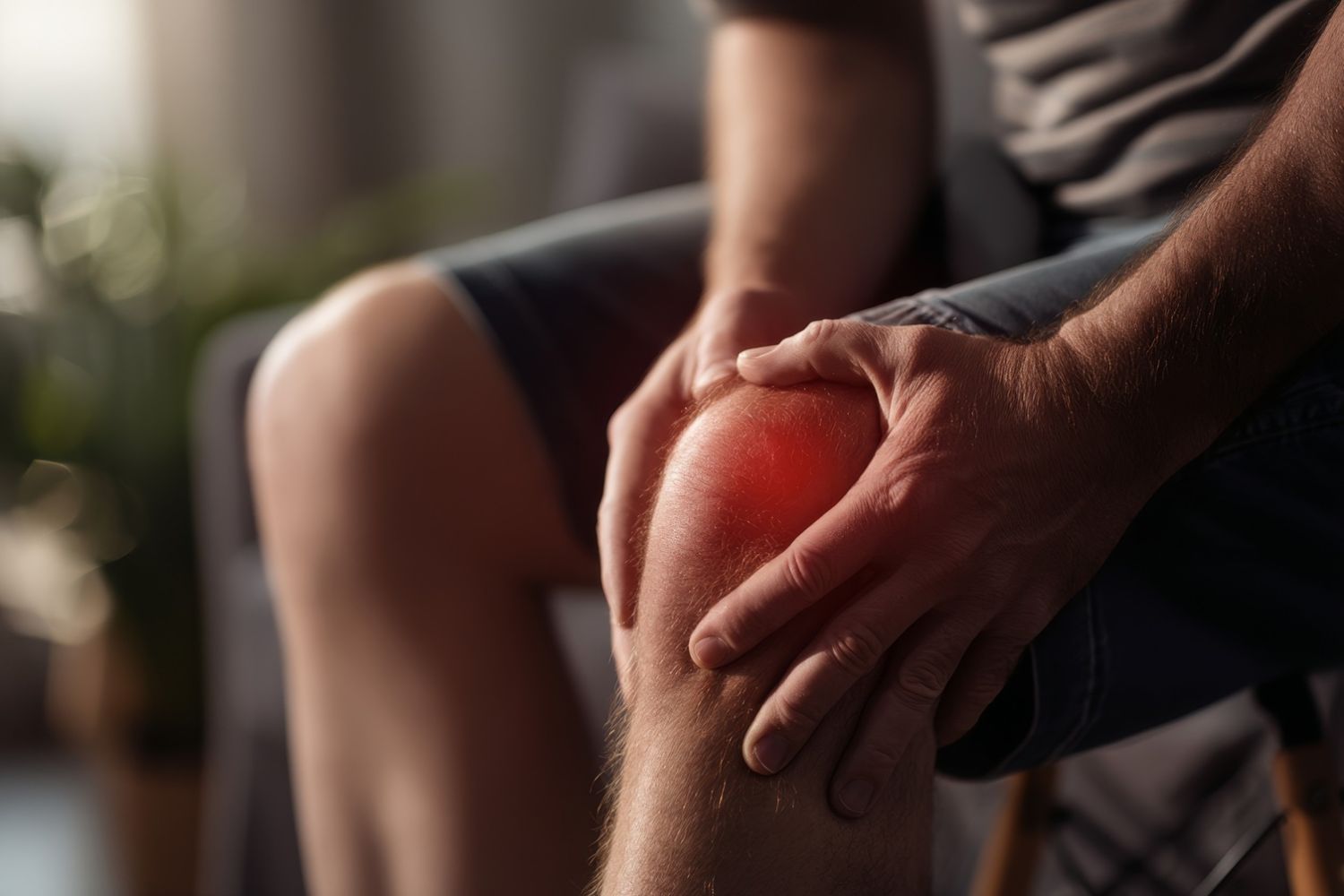
7 Tips for Healthy Knees as You Age
Patient Education Articles | Aug 18, 2025
Joint pain can make life miserable at any age. As we get older, pain in your knee is perhaps the most annoying. Every step or shift in weight can be a surprise source of pain. Knee arthritis is the common culprit, and symptoms can often be managed and function improved with many non-surgical treatments. Still, you can’t regrow lost supportive cartilage, so it’s important to provide the right type of environment for your knees to age gracefully. In today’s blog, we share seven tips for helping your knees stay healthy as you get older.
Protecting Your Knee Health as You Age
Working to provide the right environment for your knee to age gracefully and stopping small problems in their tracks are the keys behind having optimal knee health as you age. Here are the seven popular ways to protect your knee health as you age.
- Exercise, Exercise, Exercise - Some people assume that exercise only puts additional stress and strain on their knees, which in turn can exacerbate knee degeneration. If you are smart about exercise, regular movement and exercise will strengthen the joint, maintain flexibility, and improve overall function. It will also strengthen nearby structures that help to support the knee, in turn taking direct stress off the knee joint. Walking, cycling, moving on an elliptical and swimming are great low-impact forms of exercise that can aid in long-term knee health. Note: this does not mean a painful exercise that causes swelling is smart, it is not!
- Weight Management - Another key to improved knee health as you age is weight management. The more you weigh, the more stress that will be channeled through your knees, which can speed up the natural degeneration process. Stay active, eat healthy and work to maintain an ideal weight to limit excessive strain on your knee joints.
- Nutrient-Rich Diet - This goes hand in hand with the above point, do make sure that you consume a diet full of healthy vitamins and minerals. Key nutrients help to support optimal joint health as you age, and your body may not absorb these nutrients as well as you get older. Get plenty of vitamins and nutrients in your diet so that your body has no supply shortage even if absorption rates decline a bit as you age. Vitamin C is good for soft tissue repair. Magnesium can help with muscle cramping. Calcium and Vitamin D can improve bone health.
- Treat Small Problems - If you develop some mild knee pain or tweak your meniscus, don’t just push through the discomfort because it’s mild. Actively treating new or worsening knee issues is the single best way to prevent a small issue from becoming a long-term problem. Do not ignore knee problems in their infancy, because they are unlikely to improve on their own. In fact, they will only typically persist or worsen.
- Optimize Your Movements and Body Positioning - As we’ve noted on this blog, your knees handle a fair amount of the stress of your body weight, and that stress is amplified if you have poor posture or movement mechanics. Work to improve your spinal alignment when you’re seated or standing, and you can help protect your knees from excessive stress. Working with an athletic trainer, a personal trainer or a physical therapist can also help ensure your movements during athletics or exercise are not accidentally overloading your knee joints.
- Avoid Smoking - Smoking is terrible for your joint health and your overall health, so do what you can to ditch the habit or cut back. Smoking narrows blood vessels and greatly decreases a joint’s access to healthy, oxygenated blood. It can also block new DNA production and cause errors in DNA copies. Both are needed for healing and making healthy new cells. Your knee and your whole body will be much better off if you can curb or stop smoking.
- Stay Educated - Finally, one last way that you can work to have healthy knees as you age is by staying educated about the joint and the best ways to care for it. This blog is a great start. Also, “The Knee & Shoulder Handbook” written by Dr. Reznik has a wealth of information about knees and how to keep them strong at all stages of life. It also has information for athletes working to overcome a knee injury or older adults battling specific knee issues. It is a great resource for people in all walks of life who want to do right by their knees.
For more information about optimal knee health, or for questions about specific knee issues, reach out to Dr. Reznik today.
